Turning Grass into a Pollinator Refuge
Pollinators benefit all of us—they spend their summers making sure we have the produce to survive and flowers to enjoy. Yet, many of these creatures are under threat, one of the biggest threats to pollinator species is loss of habitat from urbanization and conventional agricultural development. Creating pollinator friendly spaces, especially in urban areas, is a great way to help these creatures and promote biodiversity. Pollinator gardens can be created in urban areas where space is limited; roof top terraces, community garden plots, balconies, and medians are all places that can transform into a small wildlife refuge.
Seeking opportunities to establish a garden on land owned by institutions is one way to transform the city. The emergence of hospital gardens and school gardens create the additional benefit of facilitating healing and learning. There has been an increase in pollinator gardens on university campuses over the years, and the idea to create a new one at Carleton University first arose in a Carleton Conservation Collective (C3) meeting in September 2025. The Collective is a group of faculty and students dedicated to conservation action on campus, founded by Dr. Rachel Buxton.
At a C3 meeting, a member mentioned a pollinator grant Ecology Ottawa was offering for the fall of 2025, and from there we jumped into action to get the plants in the ground before the first frost. I had been volunteering with Frank St Bee & Butterfly Garden in Centretown for around 2 years but starting a pollinator garden from scratch was new territory for me. The first step I took after meeting with Ecology Ottawa, was finding the right people on campus to contact for land permissions. The sustainability office had worked with C3 before, so we knew the person to reach out to was someone from their office. After meeting with the Manager of Sustainability Programs, we had a clear idea of where and what we could plant on campus. The next few weeks involved lots of research and reading. I wanted to make sure I was mimicking the Ecodistrict Ottawa is a part of, which is the St. Lawrence Lowlands. Another thing we wanted to consider was the type of plants.
We wanted plants that:
1) were drought resistant,
2) staggered blooms (spring, summer and fall) and
3) co-planted well together.
After selecting our plants, I decided it was the right time to start playing with the spatial layout of the plants and beds. At this time, we confirmed our site and bed design with the sustainability office. Certain plants work well together, and we prioritized “co-planting”, and arranging for plant height in both garden beds. Having a variety of plant heights is important for different plant’s growth and provides shelter and shade for the pollinators. Following the completion of the spatial layout, we put in our plant order and booked a day for planting! We gathered C3 members, and Ecology Ottawa volunteers from the broader community; primarily youth, to prepare the soil, plant the pollinator friendly species, and mulch the plants for winter.
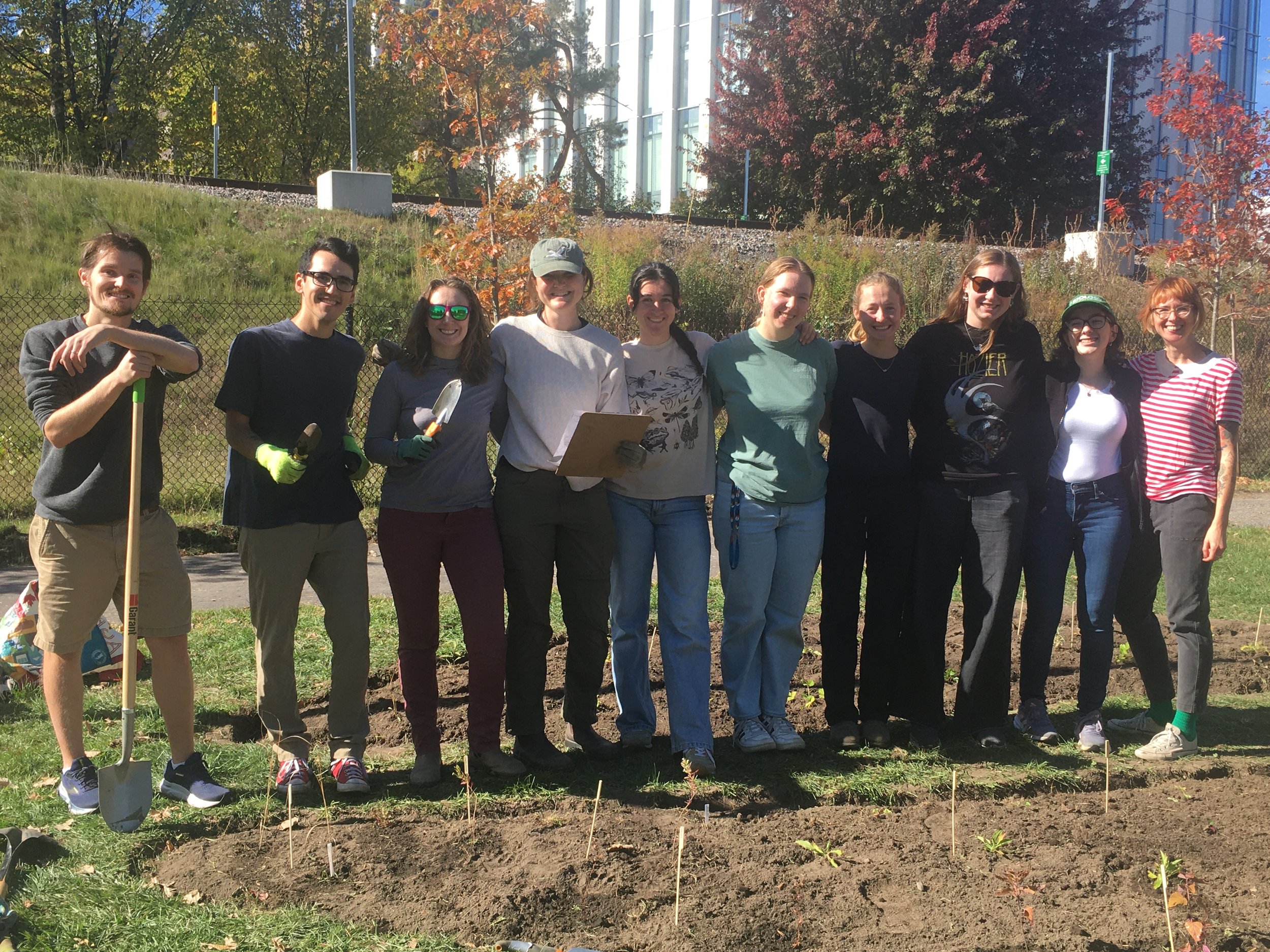
This garden is not only a great addition to the Carleton community but also creates an opportunity for future research and education. For example, my master’s work is focused on Indigenous-led land caring in urban areas, and we are hoping this garden will be the catalyst for co-creating an Indigenous Healing Garden on campus. Another PhD student studying pollinators and urban community gardens has already expressed interest in using the Carleton garden as a study site. This project has been a clear example of the benefits pollinator friendly spaces can bring to educational institutions and urban spaces. How will you be a part of the rewilding movement? Have kids? Your child’s schoolyard could have grass just asking to become a pollinator refuge and gathering place. Here’s a blog on how to create a wildlife garden at your child’s school. You can also learn more about pollinator gardens by visiting Ecology Ottawa’s pollinator garden page, and accessing learning resources to start your own.
This garden was one of four planted in the fall of 2025, as part of Ecology Ottawa’s EcoYouth program. The gardens were made possible by the generous donation of an anonymous community member. You are invited to support the creation of future pollinator gardens by donating here.