Death on Migration: Ageing and Sexing Window-Collision Birds
By: Ensleigh Hinther
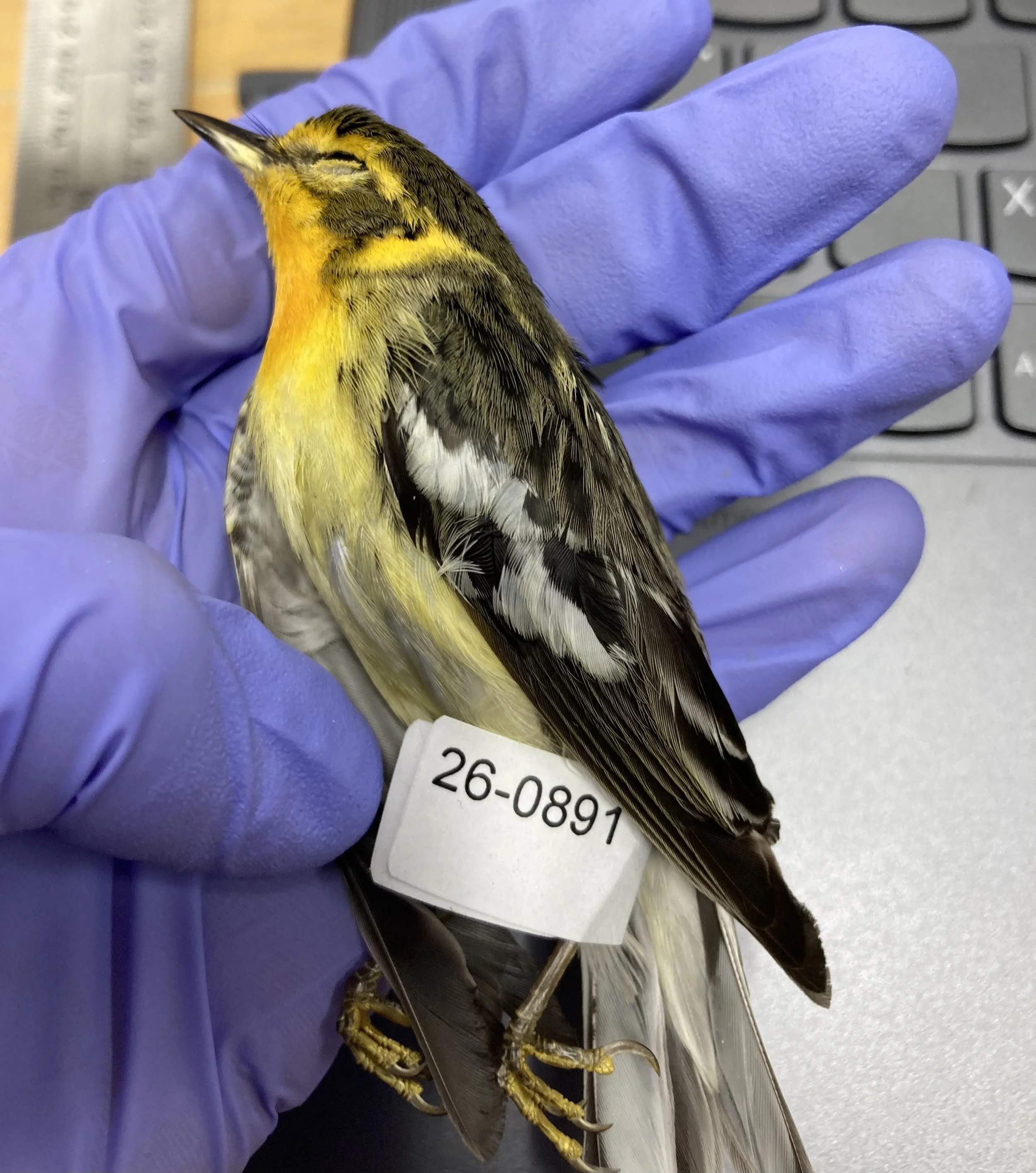
This summer I had the task of identifying, ageing and sexing birds that had collided with windows in Ottawa as part of my undergraduate honours project. Though unpleasant and sad at times, I never could have learned as much as I did this summer in any other way.
The birds came from SafeWings Ottawa, an organization that aims to reduce bird-window mortality, and collects dead birds that have collided with windows in the Ottawa area.
Most of the birds I processed this summer died in 2024 and 2025 and had been kept frozen in various volunteers’ freezers, though a few were new, and had been collected in the spring of 2026.
For ageing and sexing, I relied heavily on guidebooks like Pyle’s Identification Guide to North American Birds and online resources like Piranga and the McGill Bird Observatory. Another important piece of information I would need was the date of collection. Luckily, SafeWings keeps a record of all birds they have found, and I could easily obtain the date collected from there. Knowing the time of year is crucial to age and sex a bird correctly.
Some other important hints to a bird’s age lie in the state of the primary coverts (small wing feathers at the base of the primaries), and in the state of the rectrices (tail feathers). Younger birds could usually be identified by primary coverts that were lighter and more worn than its other feathers, and pointy, worn out rectrices.
Identifying the sex of a dead bird is impossible for some species, and quite easy in others. In the spring, brightly coloured males in their breeding plumage were very eye-catching and recognizable!
The most difficult birds to age and sex were the notoriously confusing fall warblers - many species look extremely similar in the fall, and obvious distinctions between sexes and ages fade to a drab yellow blur.
After ageing and sexing, I would record the bird’s mass and take other measurements. I also assigned each bird a fat score, which is obtained by blowing back the bird’s breast feathers to expose the yellow fat present in varying amounts in the furcular hollow.
Most were battered, but some of the specimens were remarkably beautiful. Though the circumstances were sad, I would never be able to examine a live bird to the extent that I had this summer.