Summer Morning Productivity Surveys and Nest Searches
Written by: Silvia Colucci
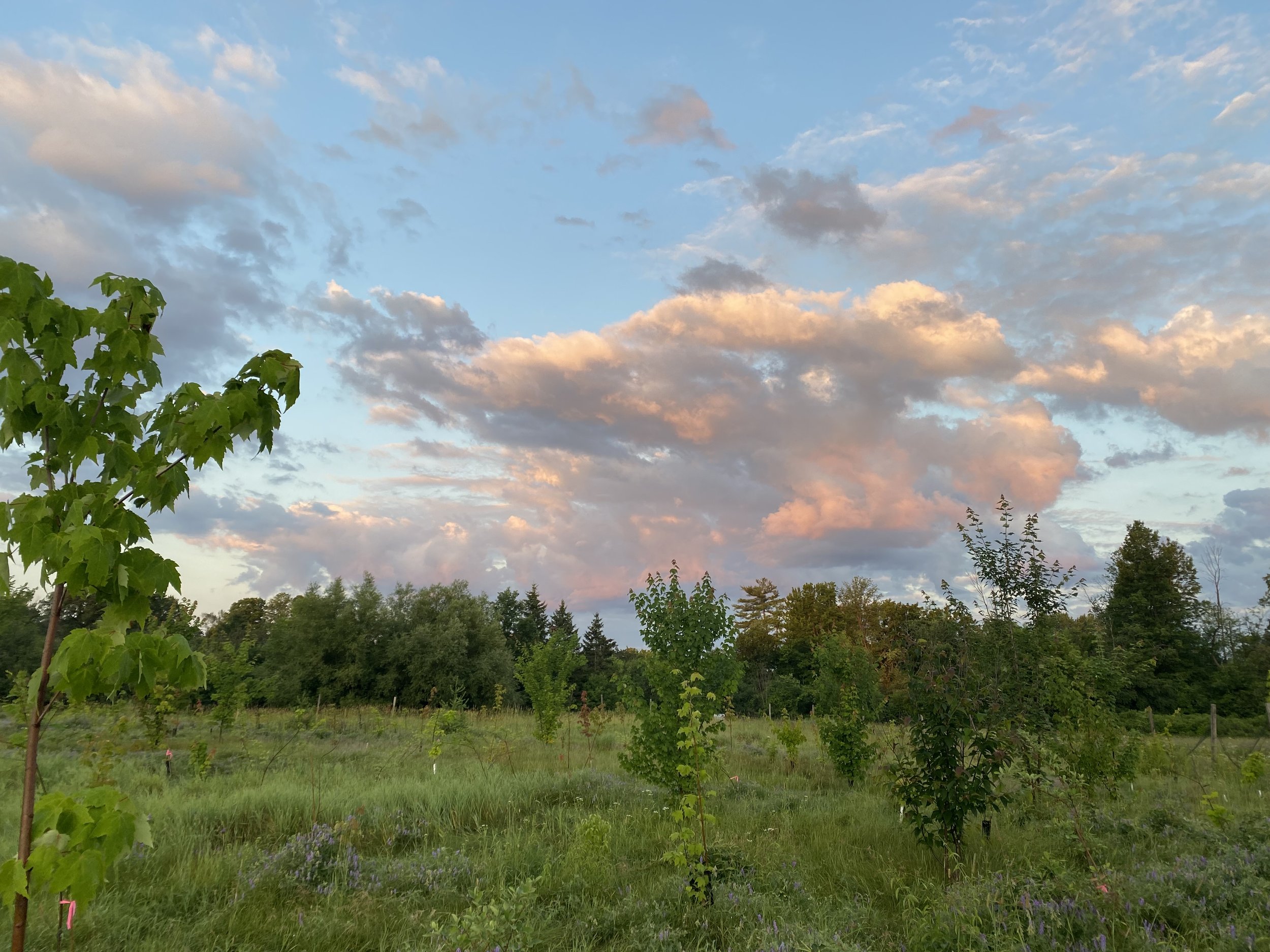
This summer, I helped MSc. student Josh perform avian productivity surveys and nest searches at urban tree planting sites in Ottawa. Here’s what a typical day looked like:
Each morning, we’d arrive at our first site around sunrise, usually between 5:00am to 5:30am. Our surveys started at this time to catch the morning chorus, when birds are most vocal, and therefore easier to observe. At each site, we played black-capped chickadee calls to attract nearby birds and conducted a 10-minute productivity survey. During the survey, we observed birds in the area by sight and sound, while also paying attention to any breeding behaviours. This included finding male/female pairs, seeing territorial chases, visits to possible nest sites, carrying food or nesting material, and if we were lucky, spotting a young fledgling!
Once we conducted a productivity survey at each site, we’d take a short break to eat, usually at a nearby McDonald’s or Tim Hortons. Then, we would return to some of the sites to look for nests!
We performed 15-minute nest searches at each site. For every nest found, we took a picture, recorded its coordinates, and noted whether the nest was active or inactive. All nests found were important as they showed that birds were using the site, rather than just passing through. Depending on the site, nest searching involved scanning trees, navigating through dense bushes, or walking through grass almost as tall as myself!
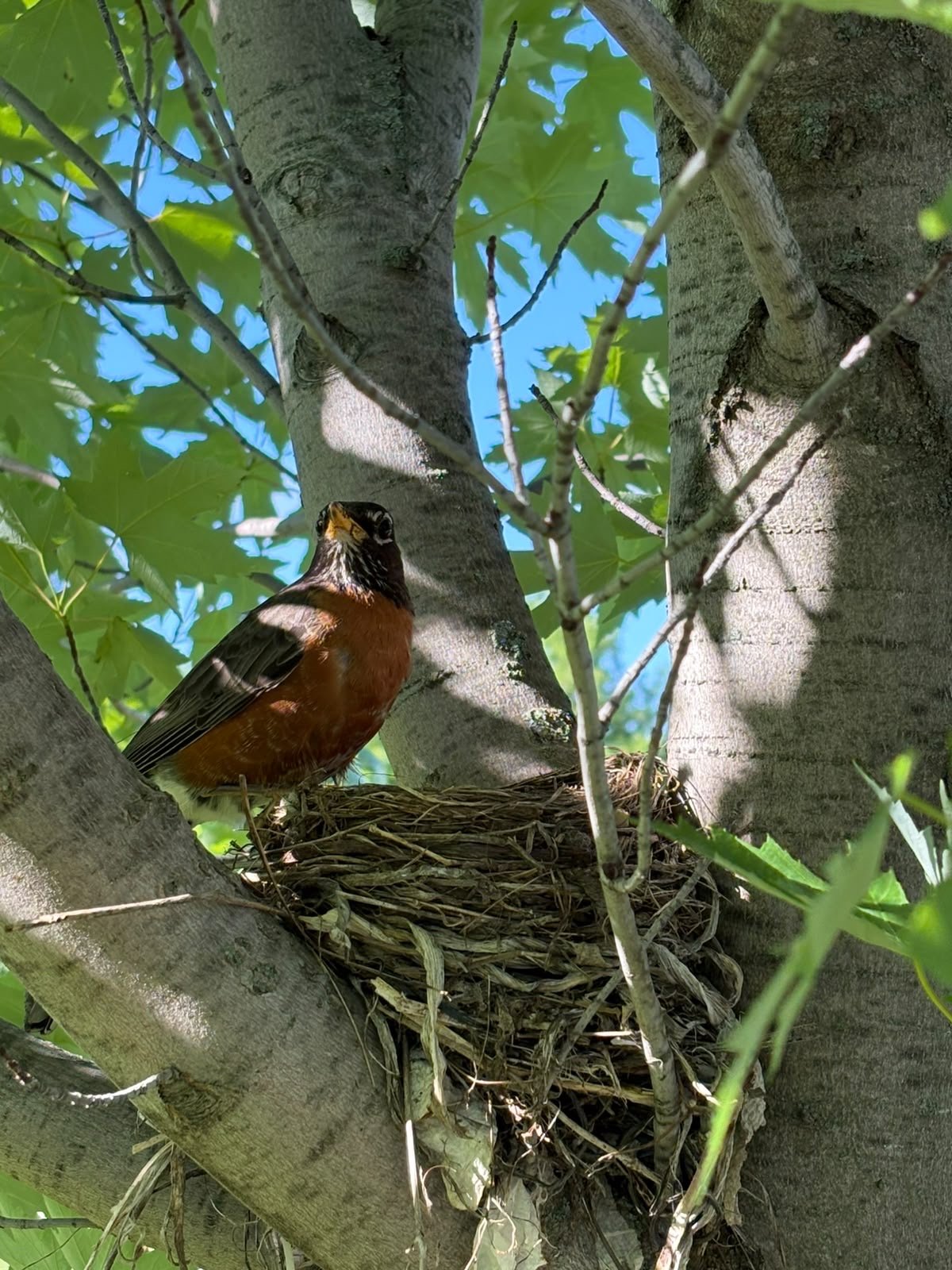
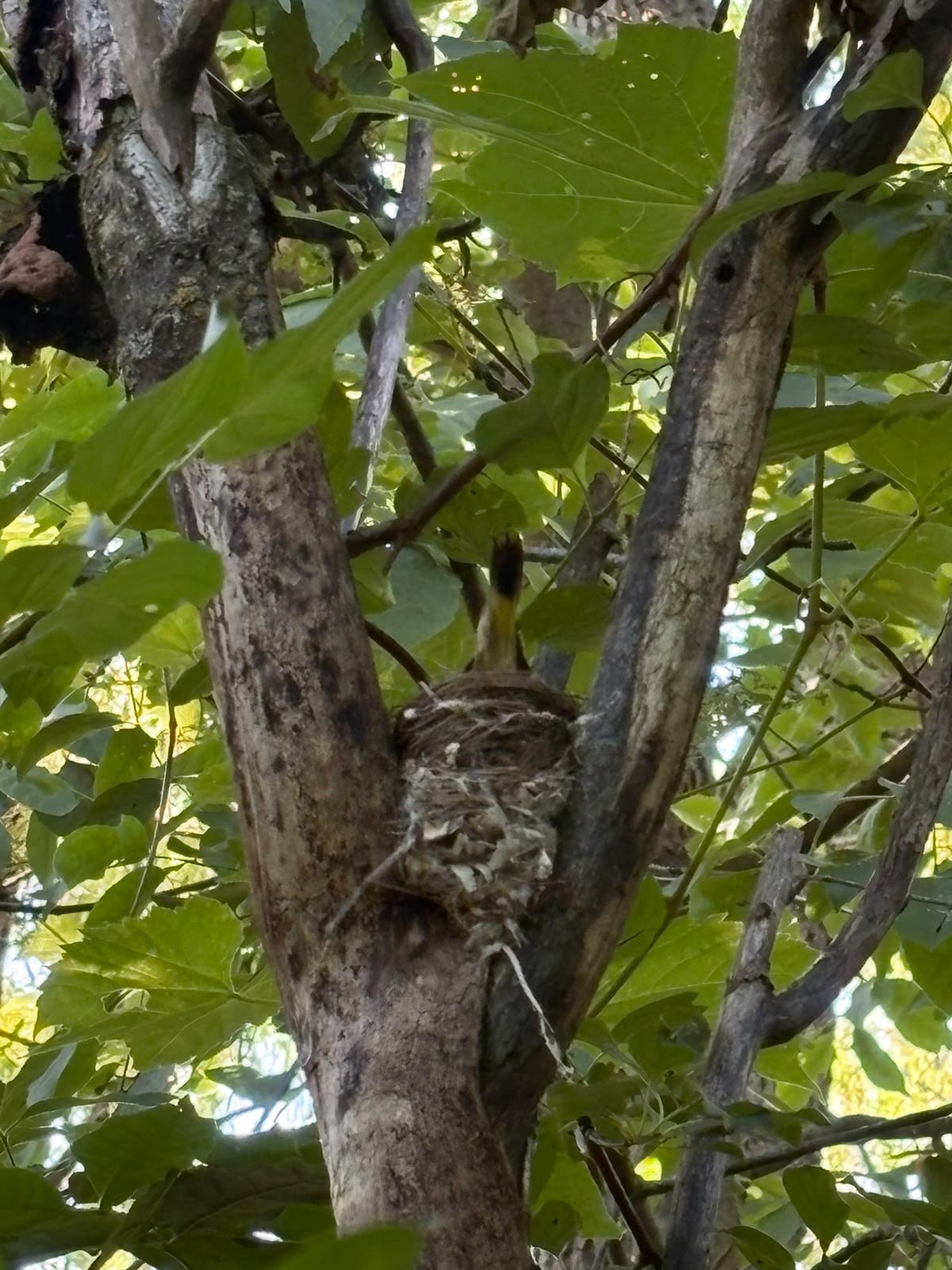
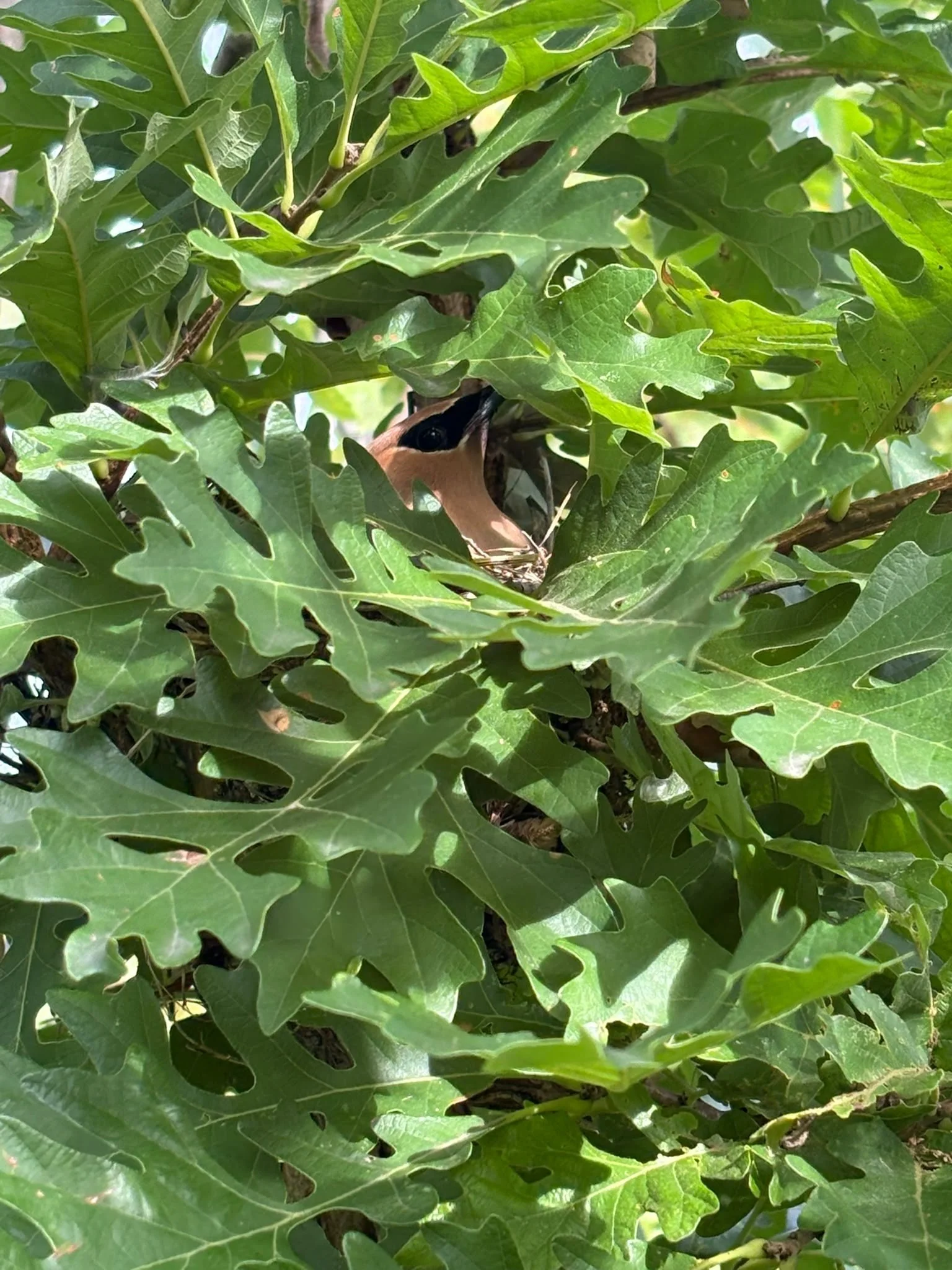
But it was definitely worth it as we got to see some cool nests, including American robin, American redstart, and cedar waxwing nests (see pictures below).
Overall, this fieldwork season was such a great experience! Not only did I get to improve my bird identification, but we were also able to explore a lot of beautiful sites in Ottawa.